How to Turn a Marathon Runner Into a 5km Runner
The 5km and the marathon may as well be completely different sports.
The physiological characteristics are quite different and the training that benefits a 5km can hinder a marathon. But switching between them isn’t as difficult and convoluted as some people suggest. Especially if you have metrics to gauge what’s working for you.
So this is how I did it with one of my clients.
Catherine is a pretty experienced runner. She’s raced a lot of different distances over many years. She’s also gone long with a trail race in the Pyrenees and Comrades in 2024 (and going back for more in 2027)!
Catherine’s last marathon was Geelong in September, where she rolled a 3:22 in less than favourable conditions.
Then she said she wanted to race 5km and 10km.
Marathon runner to 5km runner: start with the curve
Want to understand the Power Duration Curve better?
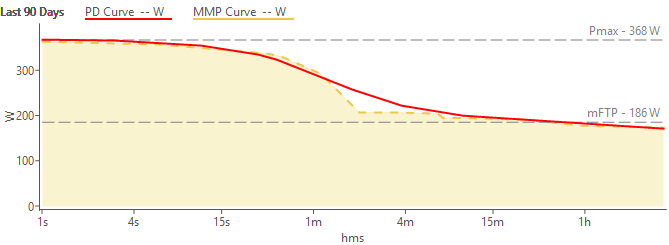
Click here for more.This charts an athlete’s intensity at different distances. More specifically their power output for each duration they’ve run. It’s the personalised representation of ability that I base almost all training off. (If you want the longer version, I’ve written about why the power duration curve beats cookie-cutter plans.)
For a marathon we need the long end of that curve (>2 hours) to be high.
That means long runs with some spiciness towards the end. Keeping intensity high for long durations. All the stuff that builds endurance…
For a 5km we don’t care about the long end of the curve
We need to increase everything from a few seconds to race duration (maybe 19 minutes). We want to stretch that speed out and make sure we have the strength to hold it. Basically, we want to lift the left side of the curve.
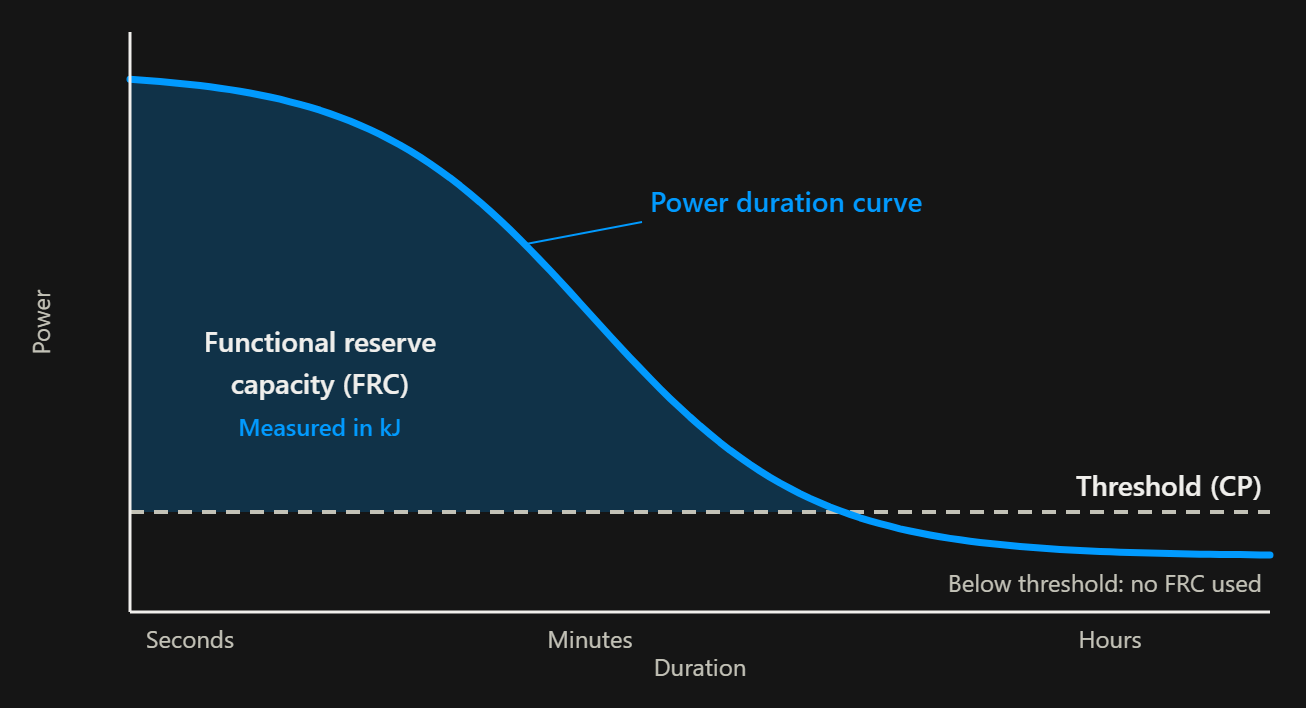
The metric we use for that is called Functional Reserve Capacity (FRC)
FRC is everything above threshold but below the curve. That front 20 or 30 minutes. It’s measured in kJ, and when using a power meter we can see if the training we’re doing is working.
The 5km workouts
So Catherine has hit a lot of lung-busting workouts!
Vo2Max work such as:
- 3 x (5 x 0:30 power at Vo2Max / 0:30 easy)
- 2 x (4 x 1:30 @ 90% of power at Vo2Max)
Lactate clearance work such as:
- 5 x 2:30 over/under threshold
- Hard starts to flood lactate followed by prolonged time around threshold
Strength endurance work such as:
- 10, 30 and 60 second hill reps
- Pushing time to exhaustion at just below threshold
But have the numbers moved?
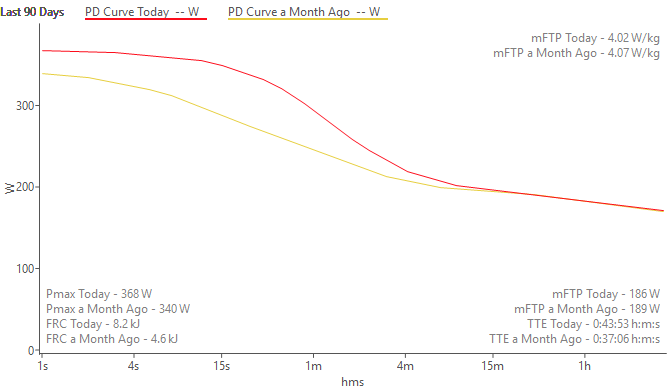
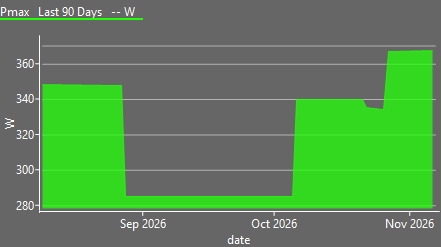
I want to see maximum power (PMax) for 1 second go up, and FRC also go up. I want to see the front end of the curve go up. I want power at Vo2Max to go up. I want to push that speed endurance out and see the 20 minute power go up.
That means she can race a 5km faster than she could beforehand.
PMax:
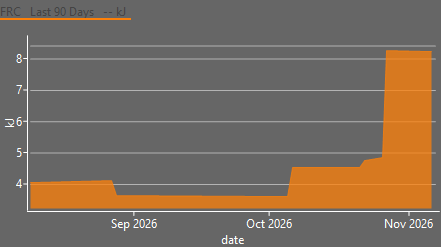
FRC:
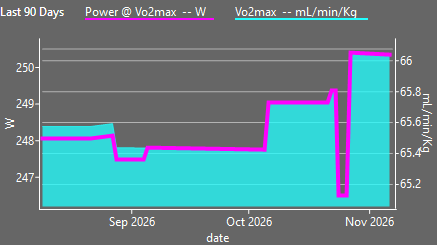
Power at Vo2Max:
And the front end of the power duration curve has lifted:
Threshold might have gone down by 3w but we don’t really care about threshold in this situation. FRC has almost doubled! PMax has increased by 28w!
The power Catherine can hold for these shorter durations has increased by 20-40 watts!
But the project isn’t complete yet. The next task is to stretch these intensities out to race duration. That will include cutdowns, fatigued reps at race pace, and plenty of work just above threshold.
A lot of people misunderstand metrics in running
The work doesn’t change because of it. You still do the work; you just stop guessing. Metrics in running show what is working and what’s not.
Here’s an example of what wasn’t working for Catherine:
Catherine is an absolute beast athlete. She can withstand 8-13 minutes above 95% of Vo2Max. That’s a long time with burning lungs and that metallic taste of blood in your mouth.
But when I wrote a workout that was 3 x (5 x 0:30 Vo2Max / 0:30 easy) the recovery between sets was too long and she only spent two and a half minutes above 95% of Vo2Max.
That’s a massive underutilisation of her capacity.
So now we know that big rest periods drop her time in Vo2. I won’t make that mistake again in her programming. We didn’t need to get to race day to realise she was struggling at that top end.
Get some more intention in your running
If you’re intrigued by how much improvement you can make by giving yourself metrics and goals to chase, book a call with me. If you’re sick of wasting months at a time and only finding out on race day that something didn’t work, book a call. If you think all these numbers are bullshit and unnecessary in running, book a call anyway.
Get some more intention in your running.
Nathan.

Nathan is a life-long endurance athlete, and data-driven marathon coach who's helped over 200 runners achieve PBs and 15+ qualify for Boston. He believes in data-driven training, no guesswork, no cookie-cutter generic plans.
Ready to Build Your Breakthrough?
Get personalized marathon coaching that uses data and science to unlock your best performance.
Book Your Free Call