Why Running Training Zones Are Only Half the Picture
There’s a coach on Instagram I genuinely respect. Smart guy. Knows his stuff.
And he keeps posting the same reel.
“Here are your training zones if you want to run a 21-minute 5K.”
A week later: “Here are your training zones if you want to run an 18-minute 5K.”
Then: “Here are your training zones if you want to run a 23-minute 5K.”
Every time one pops up in my feed I get a little more annoyed. Because they do numbers. Heaps of likes, heaps of saves, heaps of comments asking “can you do one for a 19-minute 5K?” Which is obviously why he keeps making them.
But they’re close to useless for the people saving them.
It’s everything I hate about content. It looks helpful, it gets engagement, and it doesn’t actually help you run faster.
Here’s why.
Problem 1: Training zones only tell you half the story
A training zone tells you one thing: how hard to run.
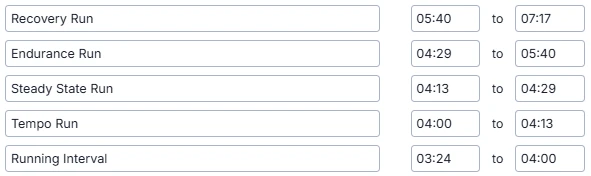
That’s intensity. And intensity is only one of the two levers you’ve got.
Everything you manipulate in training comes down to intensity and duration. How hard, and for how long. Together, those two things make up the training stress you’re putting on your body. Leave one out and you can’t actually prescribe anything.
Think about it with zone 2.
Ten minutes in zone 2 is barely worth lacing up for if what you actually need is 40 or 60 minutes there. You’ve hit the “right” zone and got next to nothing out of it.
Now flip it to zone 5.
Ten minutes in zone 5 might be exactly right for one runner. For another, it absolutely buries them. They overcook it, they’re flat for days, and if they keep doing it, they end up injured or sick.
Same zone. Same number on the watch. Completely different outcome, because the duration was different.
That’s my biggest gripe with how zones get talked about. People post the zones, some people argue about the zones, and nobody ever talks about the duration. And without the duration, the zones don’t tell you what to do. At best they’re useless. At worst they’re doing harm.
(If you want to see how much the intensity side alone can go wrong, read why your easy runs are probably too hard.)
Problem 2: Zones come from somebody else’s body
The second problem is where training zones come from in the first place.
They’re built off physiological studies. Exercise scientists tested a lot of people and worked out that, on average, running at particular intensities produces particular responses in the body.
Below threshold, that holds up pretty well. Most of us respond in roughly the same way to easy running and steady aerobic work. The zones down there are a decent guide.
Above threshold, it falls apart.
Once you get above threshold, we’re all very, very different. Some runners can hold a hard effort for ages. Others fade fast. Some recover quickly between reps, some don’t. Two runners with the same 5K time can respond in completely different ways to the same VO2max session.
This isn’t just me having a whinge. Andrew Coggan, the guy who wrote the original power training levels most zone systems are built on, said the same thing. His classic levels are set as a percentage of threshold, and they work well at or below it. Above threshold, the relationship between how hard and how long varies so much between athletes that he ended up replacing his upper levels with individualised ones built from each athlete’s own power duration data.
Here’s what that looks like:
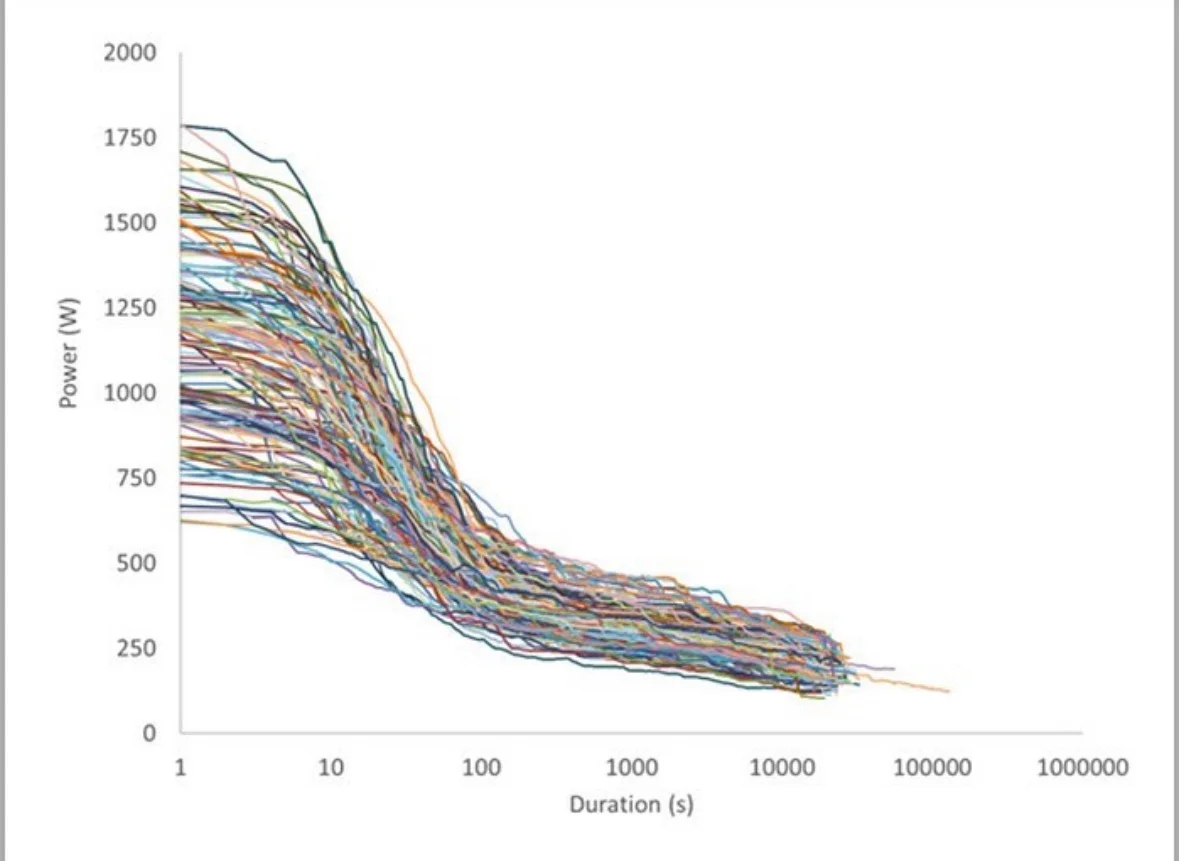
So a lot of those upper training zones are close to useless. They’re an average from a lab, applied to you, at exactly the intensities where averages tell you the least.
The fix: a curve built from your own running
What I use instead is the power duration curve.
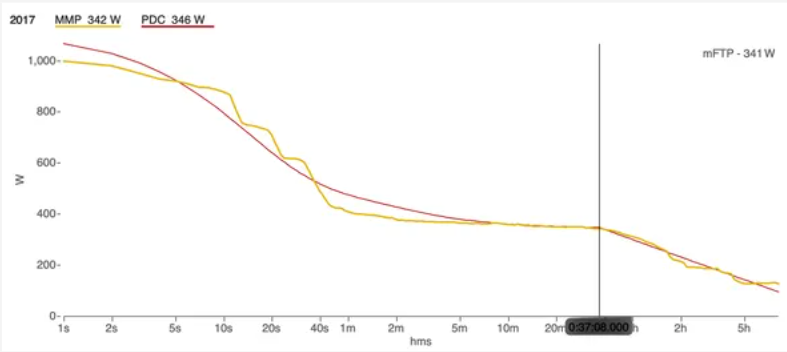
It solves both problems at once.
First, it looks at intensity and duration together. It shows the hardest you can run for every length of effort, from a few seconds out to a few hours. So you’re never looking at “how hard” without “for how long” sitting right next to it.
Second, it’s built off your data. Not a study. Not a lab. Not somebody else’s 18-minute 5K. Your own training and racing, which means it reflects how you actually respond above threshold, where the generic zones give up.
I’ve written more about how the power duration curve shows your individual limiters if you want the deeper version.
No power meter? Build a pace duration curve
Here’s the part nobody talks about.
You don’t need a power meter to get most of this. You can build a pace duration curve using numbers you probably already know.
Grab a piece of paper or open a spreadsheet and set it up like this:
- X-axis (across the bottom): duration, from 1 second on the left out to 4 hours on the right
- Y-axis (up the side): pace in minutes per kilometre, with the faster paces at the top and the slower paces at the bottom
Then plot your best pace, and how long it took, for each of these:
- 100 m
- 400 m
- 1Km
- 5Km
- 10Km
- 21Km
- 42Km
Use your best efforts from roughly the last 6 to 12 months. They don’t all have to be races. A flat-out 400 m rep in a session counts.
Draw a smooth line that follows those points.
That’s your pace duration curve.
A quick tip: because the durations run from seconds to hours, the short efforts get squashed into the corner on a normal scale. If you’re using a spreadsheet, switch the x-axis to a log scale. On paper, just give the short durations more room.
Once it’s drawn, look at the shape. Is there a section where the line dips more than you’d expect? A distance you’ve barely raced at all? That’s where your curve, and your training, is thin. And unlike a reel with somebody else’s zones, it’s about you.
Want the curve that does this for you?
A pace duration curve is a great start. A power duration curve does all of it automatically, from every run you do, and it isn’t thrown off by hills, wind or a slow surface the way pace is.
If you want to understand how it works and what yours is telling you, grab my free explainer on the power duration curve.
Nathan is a life-long endurance athlete, and data-driven marathon coach who's helped over 200 runners achieve PBs and 15+ qualify for Boston. He believes in data-driven training, no guesswork, no cookie-cutter generic plans.
Ready to Build Your Breakthrough?
Get personalized marathon coaching that uses data and science to unlock your best performance.
Book Your Free Call